
A property purchase is not an immigration plan
Buying abroad can serve two very different purposes: owning an asset and qualifying for permission to live in a country. The first is a property decision; the second is an immigration application. Some countries connect them, but the connection is rarely automatic. An eligible purchase still needs a qualifying buyer, a documented source of funds, the right type of title, government approval and, in many cases, an ongoing obligation to keep the investment.
This guide compares four destinations where property can still form part of a residence route in 2026: Greece, Cyprus, the United Arab Emirates and Malta. They are not ranked by promised returns. Each stands out for a different combination of residence rights, family options, location and entry costs. The numbers below are programme minimums, not an all-in price; taxes, legal work, insurance, fees and property maintenance can add substantially to the bill.
Start with your own objective. Do you want a base in Europe, permission to live in a Gulf business hub, or a long-term option for your family? Then ask whether the actual property would make sense without a residence permit. A home that is overpriced because it is marketed to visa applicants is not a sound investment simply because it clears a threshold.
Greece: a European base with location-based thresholds
Greece remains a prominent property-linked residence option for non-EU investors, but the old impression of a universal €250,000 purchase is out of date. Standard real-estate thresholds are generally €800,000 in higher-demand areas, including Attica, Thessaloniki and specified large or popular islands, and €400,000 in other areas. The lower €250,000 route survives for narrowly defined projects such as certain conversions of commercial buildings to residential use or restoration of listed buildings. These are not interchangeable property categories.
The residence permit is generally issued for five years and can be renewed while the qualifying investment and other conditions remain in place. Family members may be eligible under the programme. Holding a Greek permit can be valuable for someone who wants to spend time in Greece and make short trips elsewhere in the Schengen Area, but it is not a general right to settle or work in every Schengen country. A Greek residence permit is also not a Greek passport.
Before choosing between Athens, a smaller city and an island, have local counsel check the current zoning, property size and programme rules for that precise address. Confirm whether the building can legally be used as intended and whether short-term letting is restricted under the investor rules. A renovation advertised at the exceptional threshold needs especially careful examination of its previous use, change-of-use documentation, timing and completion obligations.
Greece is most compelling when the buyer genuinely wants a European home and has identified an independent reason to own that property. If the budget only works by relying on optimistic holiday-let income, test a more conservative scenario: longer voids, management costs, repair bills and a sale that takes longer than expected.
Cyprus: permanent residence with a separate income test
Cyprus offers an investor immigration permit under Regulation 6(2). The official Migration Department criteria provide a residential route through the first sale of a house or apartment from a developer for at least €300,000 plus VAT. A separate €300,000 category covers certain commercial real estate, such as offices, shops or hotels, where a resale can qualify. That distinction matters: an ordinary second-hand apartment is not the same as a qualifying new home under the residential category.
The applicant must also demonstrate secure annual income of at least €50,000, increased by €15,000 for a spouse and €10,000 for each dependent minor child. Under the residential property route, the department says that income should come from abroad. Applicants need supporting documents, health insurance and a clean criminal record. The applicant and spouse generally declare that they do not intend to take employment in Cyprus, subject to the programme’s specific exceptions.
A permanent residence label should not be mistaken for a no-conditions guarantee. The investment must be maintained, the authorities require ongoing evidence of compliance, and an extended absence from Cyprus can affect the permit. Buyers should also establish whether a developer can deliver clear title, when a separate title deed will be issued, what VAT rate actually applies and whether any mortgage or planning issue attaches to the unit.
Cyprus may suit a family that prefers an English-speaking Mediterranean base and can document income as well as purchase capital. It is less suitable for someone whose entire budget is the advertised property minimum, or who assumes that owning a flat by itself grants unrestricted work rights or an EU passport.

United Arab Emirates: property-linked residence in a global hub
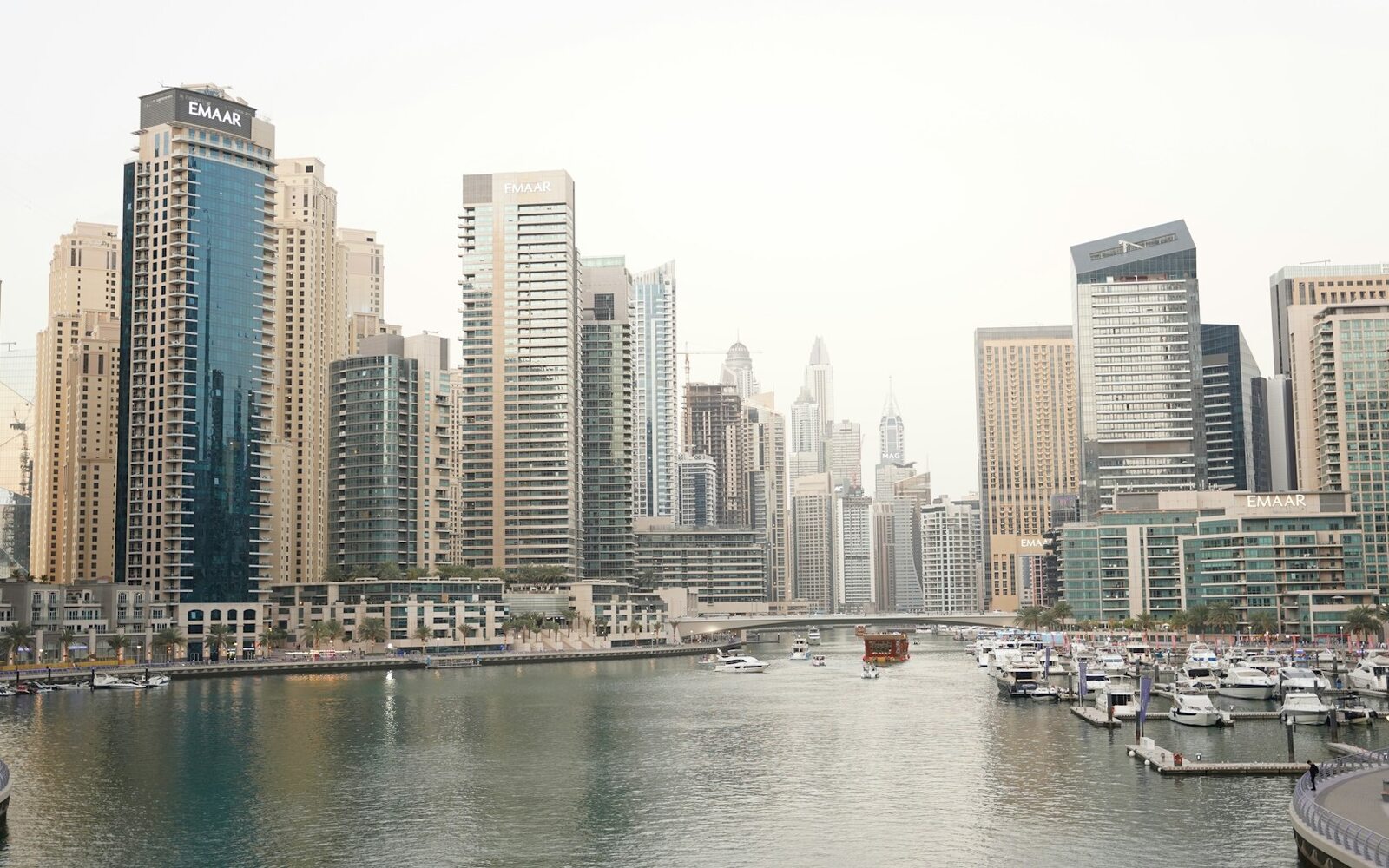
For investors looking beyond Europe, the UAE provides a different proposition: international connectivity, a substantial expat market and property in cities such as Dubai or Abu Dhabi. The UAE government’s Golden visa guidance lists an AED 2 million property threshold for real-estate investors and describes a five-year renewable residence visa for that category. Other investment categories can have different terms, so do not treat an agent’s broad “10-year Golden Visa” claim as proof of the duration available for a particular property application.
The ability to live in the UAE without a conventional employer sponsor, and to include eligible family members, can be useful for people building a business or a second base. It remains residence rather than citizenship. Eligibility, approved valuation, the way ownership is registered and treatment of mortgaged or off-plan units should all be confirmed with the relevant immigration and land authorities before any deposit becomes non-refundable.
The UAE property market also calls for ordinary investment discipline. Service charges can change the net return of an apartment. New developments may involve construction, handover and developer risks; completed units may have different maintenance and vacancy profiles. Compare transaction fees and running costs, not just the purchase price or a quoted gross rental yield.
An AED 2 million qualifying property may be attractive if you would actually use the UAE as a residence or business base. If you only want exposure to its housing market, the immigration benefit is a secondary consideration rather than a reason to waive independent conveyancing, valuation and cash-flow checks.
Malta: permanent residence with a higher total commitment
Malta’s Permanent Residence Programme takes a different approach from a simple purchase-for-permit model. Eligible non-EU, non-EEA and non-Swiss applicants may satisfy its property requirement by buying a qualifying residential property for at least €375,000 or renting one for at least €14,000 a year. This means that purchasing property is an option, not the only way into the programme.
The property figure is just one part of the cost. Residency Malta Agency currently lists a non-refundable €60,000 administrative fee, a €37,000 government contribution and a €2,000 donation to a qualifying local organisation, along with other applicable charges. Applicants also face an asset test: either at least €500,000 in capital, including €150,000 in financial assets, or €650,000 in capital, including €75,000 in financial assets. Applications go through a licensed agent and multi-tier due diligence.
The qualifying property must generally be held for at least five years; afterward, the beneficiary must continue to maintain residential property in Malta. Permanent residence gives a base in Malta and qualifying short stays in the Schengen Area, but it does not confer Maltese citizenship or an automatic right to take employment elsewhere in Europe.
Malta is worth considering if permanent status and a family-oriented European base matter more than reaching the lowest advertised property threshold. Model the contribution, legal costs, taxes, insurance and annual property costs together. If buying makes poor financial sense, compare the rental option rather than assuming ownership is necessary.

Compare the routes by outcome, not brochure price
These four programmes are not substitutes for one another. Greece offers a renewable investor permit tied to property, with thresholds that change by location and project type. Cyprus has a €300,000 property entry point but also expects qualifying income and precise property eligibility. The UAE links a substantial AED 2 million property investment to renewable residence in a very different tax and business environment. Malta can offer permanent residence, yet its property choice sits alongside sizable non-refundable fees and an asset test.
When comparing the routes, put four columns in your own spreadsheet: the property you would want even without the permit; total capital committed; cash you cannot recover; and the exact rights you expect for each family member. Review the proposed property’s resale market separately from its ability to qualify for residence. Immigration rules may be changed by governments, whereas a poorly chosen building remains your problem after the application is filed.
Do the property due diligence before the deposit
A residence route does not replace conveyancing. Ask an independent local lawyer, who is not paid by the seller, to verify title, permitted use, liens, planning approvals, building completion, developer obligations and any restrictions on foreign ownership. Obtain a separate valuation where the price appears to carry a “visa premium.” For off-plan units, understand what happens if completion slips or the developer fails.
Then check the financial model in the currency you will actually use. Transfer costs, annual property tax, insurance, service charges, management fees, vacancies and exchange-rate movements can overwhelm a promising headline yield. Financing may be allowed under some programmes but subject to detailed rules about equity, registration or the amount counted as the qualifying investment. Never assume a bank loan automatically satisfies a published minimum.
Finally, document the money trail. Immigration authorities may need bank records and evidence that investment funds came from lawful sources and were transferred in the required way. Plan for the timing of deeds, title registration, biometrics and family applications. If a reservation agreement is pushed on you before you have checked these points, the safest investment decision may be to wait.
Residency is not citizenship, and travel rights are limited
Property-linked residence usually gives permission to live in the issuing country, subject to conditions. Citizenship normally requires a separate legal process and may involve years of residence, language requirements or other tests. A residence card does not replace a passport, and it does not erase the entry rules attached to your nationality.
A Schengen residence permit can generally help with short travel to other Schengen states, commonly up to 90 days in a 180-day period, but it is not a work permit for those states. The UAE permit does not provide European travel rights. Your family members’ eligibility, ages, health cover and right to work also vary by programme. Our passport comparison guide helps frame the separate question of how a passport affects international travel.
Tax residence is another separate test. Spending more time abroad, owning property or moving your centre of life can change tax obligations in ways a visa brochure will not explain. Get advice in both your current country and the proposed destination before structuring a purchase around tax assumptions.
Why Spain and Portugal are not property picks here
Older investment articles often recommend buying a home in Spain or Portugal to obtain a Golden Visa. That advice is not current for a new applicant in 2026. Spain ended its investor residence visa route for new applications in April 2025. Portugal’s investment residence programme continues through other qualifying categories, but real-estate purchases are no longer an eligible new investment under that route.
Both countries can still be attractive places to buy or live, and each has other immigration categories with their own requirements. The point is narrower: do not sign a property contract believing it will automatically open an investor-residence path that has closed. Verify the present route, not an old advertisement or an article about applications submitted under earlier rules.
How to build your 2026 shortlist
Choose a destination by starting with daily life. How much time do you want to spend there? Does your family need schools, healthcare or permission to work? Which country has an actual property market you understand and an exit you could live with? A permit that looks generous on paper may be of little value if you would never use the home.
Next, request written confirmation of the current rule from an appropriately qualified local adviser. Ask for an itemised budget and a list of documents needed before money is committed. If someone promises a guaranteed permit, unusually fast approval or a fixed rental return, treat those claims as points to investigate rather than benefits to bank on. Government decisions and property returns are never guaranteed by a sales brochure.
The right decision may be to buy, to rent while researching, or to postpone an application. For readers who want to understand how mobility and destination choices fit together, our guide to passport strength offers a useful companion to the residency question.
The bottom line
Greece, Cyprus, the UAE and Malta each offer a credible property-related residence conversation in 2026, but for different people and different budgets. Compare the complete cost, the property’s independent merits and the precise permit conditions. Rules can change, so confirm them with the relevant immigration authority and independent legal, tax and property professionals before buying. This guide is general information, not investment, legal, immigration or tax advice.